Shipping is €3.90 | Free for orders over €50
Shipping is €3.90 | Free for orders over €50
The rolling hills of the Marche region are steeped in history, literature, art, and legend. They are not only home to medieval villages but also to thriving lands and lush vineyards. It was on one of these hills, the Buscareto hill, that a castle was built in the early 1200s—a residence that would become the symbol of the Counts of Buscareto.
We are in the Misa Valley, nestled in the heart of Marche, a land rich in history and flavors, characterized by breathtaking landscapes and enchanting villages. The Misa River, which flows through this valley, originates in the southwestern slopes of the Arcevia anticline and passes through historic towns such as Arcevia, Serra de’ Conti, Ostra Vetere, and Senigallia.
This special land provides the perfect environment for viticulture, thanks to its soil composition and favorable climate, allowing the production of high-quality wines such as Lacrima di Morro d'Alba and Verdicchio dei Castelli di Jesi.
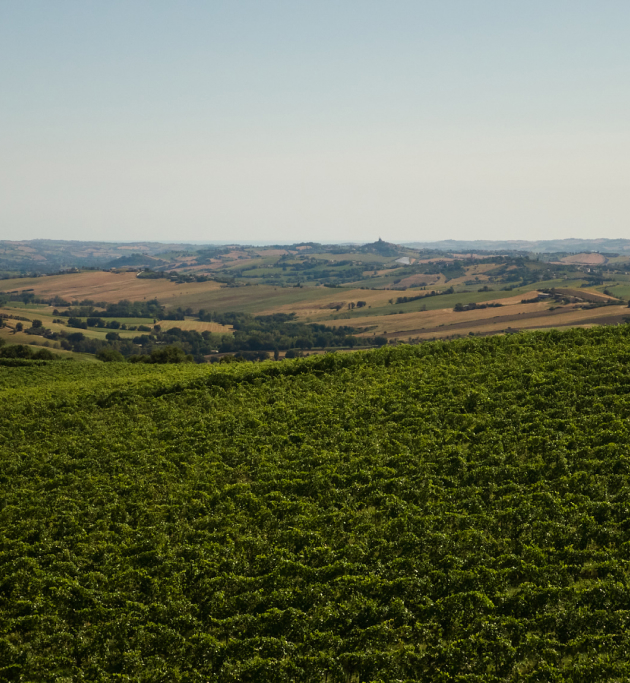
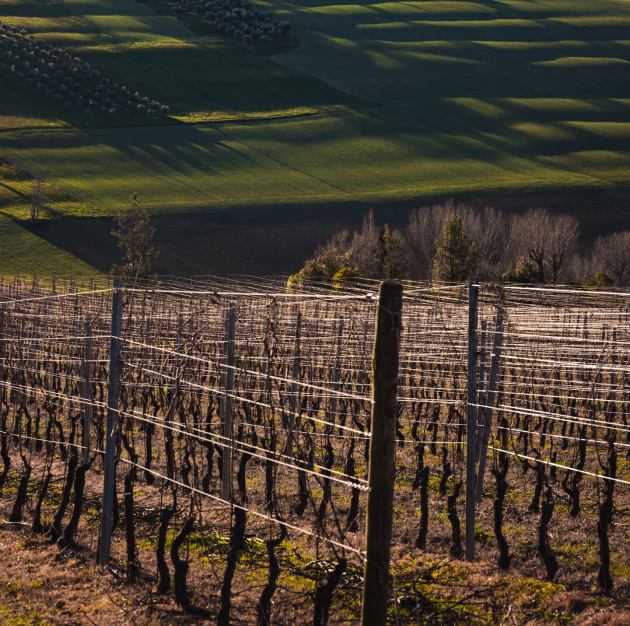
This is where the story of the Counts of Buscareto unfolds—a noble family that left its mark on these lands between the 12th and 15th centuries, intertwining their fate with the authentic flavors of the Marche.
Though initially of lower nobility, the Buscareto family carried within them an unquenchable ambition. Their very names—Ammazzaconte ("Count-Slayer") and Abbassaconte ("Count-Humiliator")—spoke of their determination to claim power among the ruling elite. By the late 1200s, they had achieved their goal, rising to the rank of Feudal Lords.
This newfound power placed them at the heart of fierce battles and political turmoil, forcing them to continuously shift alliances between the Church and the Empire, between Guelphs and Ghibellines. Yet, amidst the chaos, an oasis of peace and camaraderie always remained: the banquet table. During moments of truce, family feasts, and popular celebrations, all sought comfort in a steaming dish of game, paired with the rich aromas and flavors of a glass of red wine.
In 2002, Claudio Gabellini, an IT entrepreneur with a deep passion for wine, embarked on an ambitious mission: to revive the forgotten vineyards of the region.
Driven by his love for his homeland and a desire to restore the prestige of Marche wines, Gabellini founded Cantina dei Conti di Buscareto. His goal was clear: to preserve and enhance local winemaking traditions, crafting wines that embody the authenticity and excellence of the region.
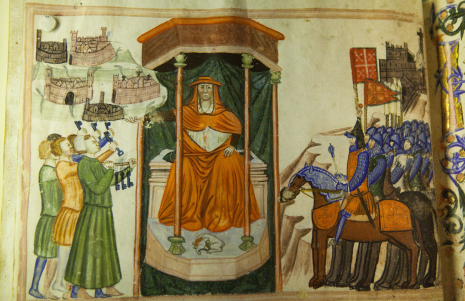
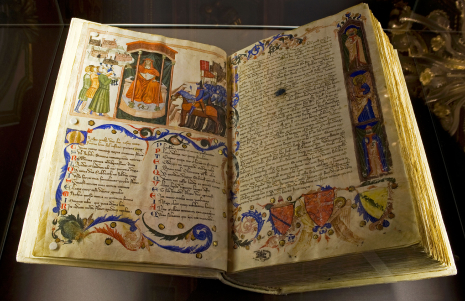

Bisaccione:
Bisaccione was the founder of the Buscareto lineage, the patriarch who gave rise to the entire dynasty. His name also recalls another key figure in the family’s history: Nicolò di Bisaccione. Seeking to establish his own dominion, he became Imperial Vicar of Jesi, consolidating power by uniting the podesterias of Montenovo and Serra de’ Conti.
However, his story was one of both ambition and struggle. Caught in the power struggles of 14th-century Italy, he became embroiled in bitter conflicts, including the Siege of Corinaldo in 1360. His fate was sealed when he was captured and spent his final years imprisoned in the fortress of San Cataldo in Ancona.
Like his story, every sip of Bisaccione carries a rich depth and complexity, a tribute to the bold and intricate history of its namesake.
Ammazzaconte:
Ammazzaconte and Abbassaconte were the sons of Bisaccione. Their names alone tell a tale of boldness and defiance—a family that challenged the social hierarchy, determined to claim its place in a world ruled by nobility and royal officials.
Each sip of Ammazzaconte evokes the resilience and strength of the Buscareto family, a true tribute to their rebellious spirit.
Compagnia della Rosa:
In 1398, Giovanni, son of Nicolò di Bisaccione, a fierce and headstrong young man, founded the Compagnia della Rosa alongside Bartolomeo Gonzaga, a renowned mercenary captain.
This formidable army of 1,000 knights and an equal number of foot soldiers was hired to defend Bologna against Pino Ordelaffi, Lord of Forlì. However, the campaign ended in defeat. Some members of the Compagnia della Rosa returned to the Marche region, still led by Giovanni, while others continued to serve under Gonzaga in Tuscany until 1410.